
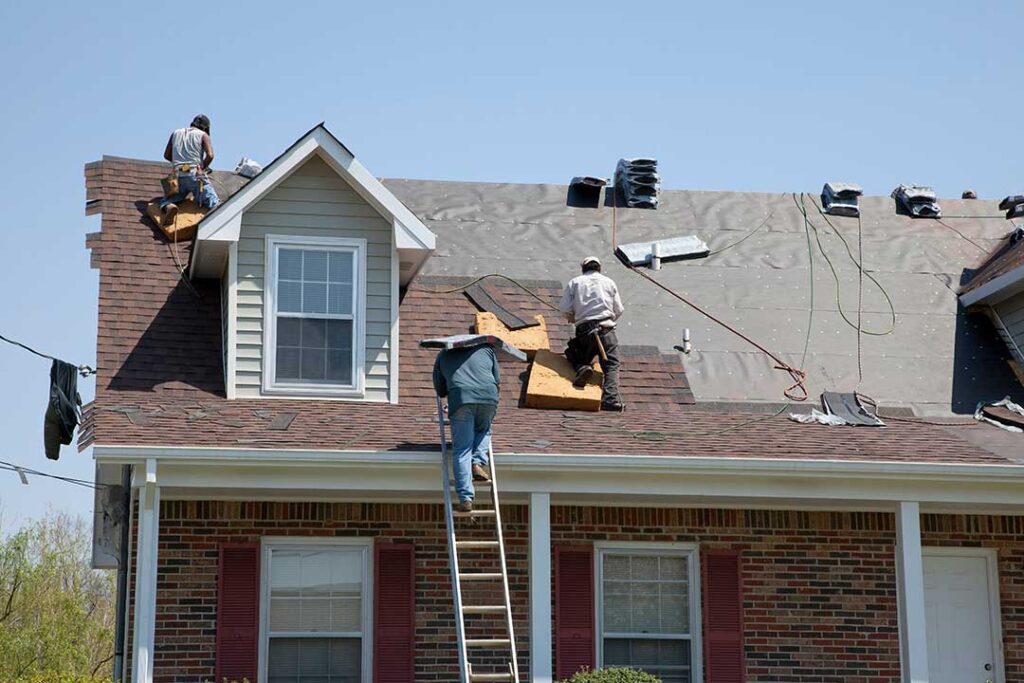
A roof leak should be treated as a water-management problem first and a repair problem second. The immediate goals are to protect people, limit interior damage, document what happened, and avoid making the roof condition worse.
What should you do first after discovering a leak?
Move belongings away from the affected area and place a container under active dripping. If water is spreading across a ceiling, sagging drywall may collapse, so keep people away from the area and do not stand directly beneath it.
If water is near a light fixture, outlet, appliance, or electrical wiring, avoid touching the fixture or walking through wet areas. If it can be done safely from a dry location, turn off power to the affected circuit. Do not enter an attic or climb onto the roof while electrical components may be wet.
A small ceiling stain may not indicate a small roof problem. Water can travel along rafters, insulation, plumbing lines, or ceiling framing before becoming visible indoors.
How can you reduce interior damage?
Use towels, buckets, plastic containers, and tarps to control water temporarily. If a ceiling is bulging, a qualified person may carefully relieve trapped water from a safe position, but puncturing a ceiling is risky if the location of wiring, plumbing, or structural damage is unknown.
Protect flooring and furniture, but avoid placing heavy objects on a weakened ceiling or wet drywall. Photograph the affected areas before moving items whenever possible. Useful records include:
- The location and size of ceiling stains
- Active dripping or water trails
- Damaged insulation, flooring, walls, or belongings
- The attic side of the roof, if it can be inspected safely
- Exterior roof conditions visible from the ground
Ventilate the room if conditions allow, but do not use fans around wet electrical equipment. Wet materials can begin developing odor and microbial growth if they remain damp for an extended period.
Should you climb onto the roof to find the source?
Usually, no. A wet roof is slippery, and a leak may occur several feet away from the point where water enters the house. The danger is greater after rain, snow, freezing temperatures, or strong wind.
A ground-level inspection is safer. Look for:
- Missing, lifted, cracked, or damaged shingles
- Exposed underlayment or roof decking
- Damaged flashing around chimneys, vents, skylights, and roof edges
- Clogged or overflowing gutters
- Tree limbs or debris resting on the roof
- Areas where snow or ice has accumulated unevenly
In Poughkeepsie, changing seasonal conditions can place repeated stress on roofing materials. Freeze-thaw cycles may enlarge small cracks, while heavy rain, wind, falling branches, and ice buildup can expose weak points. A roof that appears intact from the yard may still have concealed damage.
How do you locate the likely source of a leak?
Start indoors, then work outward. In the attic, look for wet insulation, darkened wood, water marks, rusted fasteners, or damp areas near roof penetrations. Follow water stains uphill toward the roof surface, while remembering that water may move sideways along framing.
Common leak locations include:
- Flashing around chimneys and vent pipes
- Valleys where two roof sections meet
- Roof edges and areas near gutters
- Skylights and other roof openings
- Damaged or missing shingles
- Nail pops and exposed fasteners
- Failed sealant around penetrations
- Low-slope sections where water drains slowly
A bathroom or kitchen ceiling stain is not always caused by the roof. Plumbing leaks, condensation, ice dams, and improperly vented exhaust fans can create similar symptoms. The source should be confirmed before materials are removed or sealed.
What should you do if the leak happens during a storm?
During active severe weather, stay off the roof and avoid outdoor inspections. Temporary interior containment is safer than trying to make an exterior repair in rain, wind, lightning, or icy conditions.

If a tree or large branch has fallen onto the roof, treat the area as structurally unsafe. Do not walk beneath visibly damaged sections, and keep children and pets away from the affected part of the house.
A temporary roof covering may limit additional water entry, but it must be installed securely and only when conditions are safe. Loose plastic can blow away, collect water, damage shingles, or create a fall hazard. Emergency measures are not a substitute for identifying the damaged component and correcting the cause.
Is a roof leak an emergency?
Some leaks require immediate attention because they present a safety or structural risk. Examples include:
- Water near electrical equipment
- A sagging or collapsing ceiling
- Rapid water entry during rainfall
- Major roof damage after wind or falling debris
- Visible movement or cracking in roof framing
- Water entering multiple rooms
- Heavy interior flooding
- A leak in a home with vulnerable occupants or valuable equipment
A slow stain that is no longer expanding may be less urgent, but it still should not be ignored. Repeated wetting can damage insulation, wood framing, drywall, paint, flooring, and household contents. Hidden moisture can also make later repairs more extensive.
What information should you document?
Keep a written record of the date, weather conditions, where the water appeared, and whether the leak stopped when rainfall ended. Note any prior repairs, roof work, gutter cleaning, tree activity, or changes in attic ventilation.
Photographs should show both close-up damage and wider views that establish the location. Save receipts for emergency materials, cleanup, temporary lodging, or damaged belongings if an insurance claim may be considered.
Insurance coverage depends on the policy and the cause of loss. Sudden storm damage may be treated differently from long-term deterioration, neglected maintenance, or repeated seepage. Documentation cannot guarantee coverage, but it can make the timeline and condition easier to understand.
What should happen after the leak stops?
Stopping visible dripping does not prove that the roof is dry or repaired. Inspect the ceiling, attic, insulation, roof decking, flashing, gutters, and nearby wall cavities for remaining moisture.
Wet insulation may lose its effectiveness and can conceal damp framing. Drywall with limited surface staining may sometimes be dried and monitored, while softened, crumbling, or persistently damp material may need removal. Odors, discoloration that continues to spread, and returning stains indicate that moisture may still be present.
The repair should address the entry point and any underlying drainage, flashing, ventilation, or structural issue. Applying sealant over a visible symptom may provide only a short-lived result if water is entering elsewhere.
How can future leaks be reduced?
Routine observation is useful, especially after major storms and before winter. From the ground, check for displaced materials, overflowing gutters, debris, and water stains on exterior walls. Keep tree limbs away from the roof where practical, and avoid attaching equipment or decorations in ways that puncture roofing materials.
Attic ventilation and insulation also matter. Warm air escaping into a cold attic can contribute to condensation and ice-related problems. Bathroom and kitchen exhaust should vent outdoors rather than into the attic.
For area households, roof inspections are particularly useful after cycles of heavy rain, strong wind, snow, and freezing temperatures. Early attention to damaged flashing, blocked drainage, or loose roofing materials can prevent a small water entry point from becoming interior damage.
